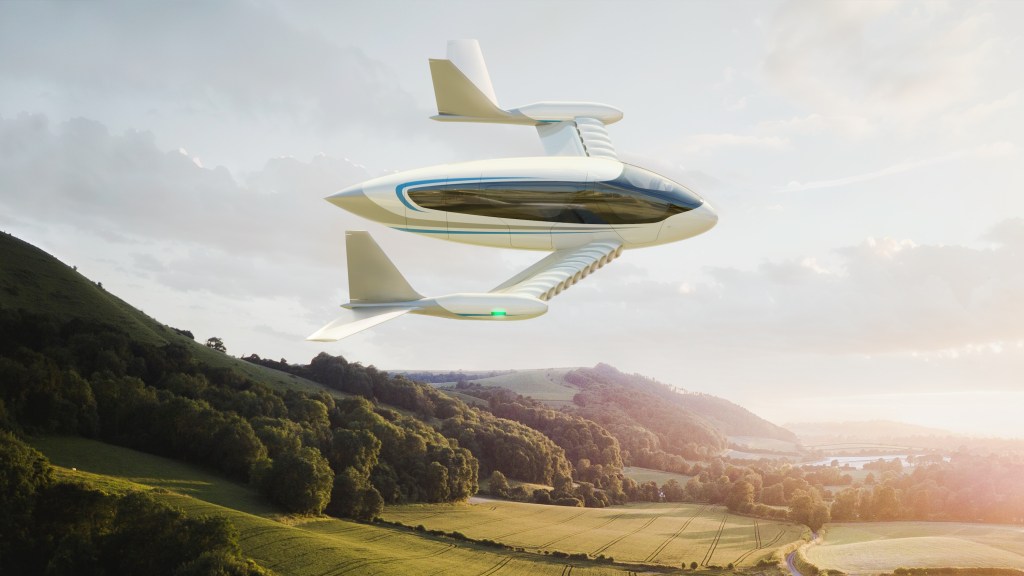
“We wanted flying cars, instead we got 140 characters” – Peter Thiel
Flying cars have been a hopeful technological benchmark for futurists for the better part of the century. Since Glenn Curtiss strapped wings onto a Model T in 1917, there’s been a fascination, particularly among Americans, of combining our love of cars and the art of flight. The Jetsons pushed the idea in the 60’s, and countless other movies and TV shows have featured airborne automobiles since. While excitement around flying cars has waned in the past decades for various reasons (including feasibility), science fiction nerds and futurists alike may have reason to rejoice in the future as there appears to be a path forward for flying cars in the form of eVOTLs (electric vertical take-off and landing).

From small drones to large people carriers, these vehicles have the potential to solve problems across a variety of industries. The delivery of goods, human transports, military and defense, and emergency services may all be affected by eVTOL technologies. However, reaching mass-market adoption will be no easy feat. It is highly dependent on multiple factors including helpful regulators and government officials, advanced technologies, improved infrastructure, and public acceptance. That being said, when (not if) all of these are aligned, eVTOLs will have a massive impact on people around the globe.
Use Cases: Where will we see eVTOL technology?
While the idea of a flying car was the genesis, such revolutionary technology now has additional clear use cases beyond just personal human transport.
UAM: EVTOLs have the potential to displace many road-going cars. The average speed of a car is relatively slow, particularly in metropolitan areas. By taking transportation from 2D to 3D, eVTOLs can travel at speeds of over 100 miles per hour, offering shorter trip times at relatively competitive prices. This means that people can live further distances from urban centers while still being only a few minutes away.
Last-mile delivery: If it wasn’t apparent before, the COVID-19 pandemic further proved how dependent we have become on ecommerce. 37 million packages are delivered every single day! Last-mile delivery is the most expensive part of the supply chain, and delivery drones offer a way to deliver packages cheaper and faster than the hundreds of thousands of Amazon, FedEx, and UPS trucks that zig-zag residential streets day in and day out.
Short-haul passenger aircraft: Electric aircraft have many benefits compared to their jet-powered counterparts including lower carbon emissions, reduced fuel costs, and reduced maintenance. Short flights between large cities—like LA and San Francisco, Boston and New York, or New York and DC—present opportunities for electric aircraft to be introduced into commercial air lines.
Military & Defense: Small electric quadcopter drones are already currently in use by ground forces for reconnaissance purposes. As technology improves, eVTOL use within the military will expand for both non-combat (resupply, relocation of personnel, and emergency medical response) and combat (replacing loud, jet fuel-burning drones with electric aircraft). We can expect to see government investment increase in order to ensure that the US is on the technological cutting-edge.
Market Drivers: What has changed since the Jetsons?
VTOLs (read: helicopters) have existed for nearly 100 years. They’re expensive, loud, and can be very dangerous. As such, they’ve never been used for more than a handful of specialized use cases. However, the confluence of hard tech advancements, increased demand for last-mile delivery, and pushes for sustainability open the door for eVTOLs.
We have seen huge strides in technological advancements. EVTOLs will benefit from the deeper investments into adjacent industries, specifically drones and electric vehicles. Increased battery density will enable longer range and increased payloads. Improved sensors and AI/ML will allow for autonomous flight, decreasing pilot costs and improving safety. Mega-satellite constellations will enable connectivity that is safe, secure, and redundant, which is absolutely necessary to prove to regulators that eVTOLs can safely be utilized. Each of these technologies not only enables additional use cases, but leads to potentially profitable economics.
We are also seeing increased demand for last-mile delivery, which comprises over 50% of shipping costs. 37 million packages are delivered everyday, with Amazon itself shipping over 1.6 million packages. With ecommerce expected to grow at a 15% CAGR through 2027 and last-mile delivery as the biggest cost driver for supply chains, logistics companies are starting to look to lower-cost and faster delivery methods like delivery drones.
Transportation and supply chain sit squarely in the crosshairs of sustainability activists. Transportation makes up 27% of all greenhouse gas emissions. Supply chain emissions can make up 90% of emissions for enterprise organizations. Cars, trucks, and delivery vans are transitioning away from fossil fuels, and aviation is seen as the “next frontier” for sustainability.
Logistics and delivery, human transport, and military applications represent huge markets that will adopt eVTOL technology for their individual use cases. Taking each of these into consideration, Morgan Stanley estimates a base case TAM of $55B in 2030 and $1T in 2040. These are huge numbers, and even if they are off by an order of magnitude they still represent extremely large markets that will support a number of players.

Timeline: When will we see eVTOL take off?
We are nowhere close to an eVTOL inflection point. By far the biggest stumbling block to eVTOL’s success is regulation. EVTOLs are a new category for the FAA and EASA who are constantly changing and adjusting their stances; initial market entrants will face a high-level of scrutiny with no standard timeline or framework for approval.
Another variable is the associated economics. With last-mile delivery being the biggest cost driver in the supply chain, delivery drones are already a promising cost-saving option. However, the economics and business models around UAM, while promising, still carry significant risks. These risks can be mitigated with improved technology including autonomous flight (fewer pilots needed and less weight on the aircraft) and increased battery density and charging (lighter-weight, longer-range, and decreased aircraft downtime).
Technology and associated infrastructure are other question marks. EVTOLS are highly dependent on advanced technologies. Some of these are highly-developed and ready to be implemented (communication infrastructure, electric motors, and advanced materials manufacturing) and others will require further development before eVTOLS can be economically viable (battery density and charging, autonomous systems). Fortunately, there is extensive overlap with technological advances in electric vehicles. EVTOLS will be “free riders” to the progress made with EVs. Unfortunately, the same is not true for eVTOL infrastructure. The necessary infrastructure for UAMs and delivery drones are fundamentally different from what is being used for current air transport, and could require extensive real estate in order to support.
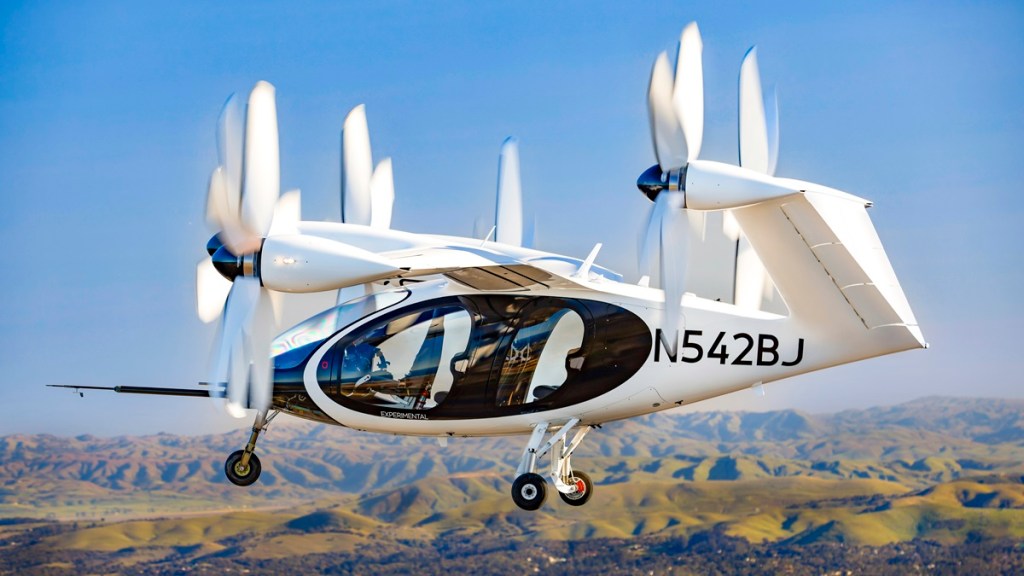
The final “star to align” is public acceptance. Consumers not only need to see the value in eVTOL use cases but feel safe enough to use them. Fortunately, full autonomous flying and the use of distributed electric propulsion (DEP) could make eVTOL travel much safer than cars. Not only could eVTOLs be safer, but they could be quieter as well. Kitty Hawk’s Heaviside aircraft is 100x quieter than a helicopter, and Joby has demonstrated a sub-65 acoustic measurement (about as loud as a normal conversation) during takeoff and landing.
So, when can we expect the eVTOL inflection point to happen? Drone delivery company Wing is piloting their service with Doordash in Australia. Joby is working closely with the FAA towards a certification that would allow them to launch air taxi operations in 2024. The momentum is starting to build, and we could start to see early use of air taxis and delivery drones in the next 2 to 3 years. We can look towards early pioneers like Joby’s success—or lack thereof—as a tell of how things will fare in the future.
Opportunity: Who will win eVTOL?
With the disruptive potential of eVTOL technologies, we’ve already seen large amounts of capital being poured into startups in the space. The market will undoubtedly be large enough for multiple winners, but with an unknown time horizon on when mass adoption will occur, the vast majority of these startups may not be able to weather the storm. I believe the winners will fall into 1 of 3 categories.
First, we have the first-to-market startups with the capital to force the eVTOL movement. These are the first entrants who will need to have near-perfect execution and impeccable market timing. It’s too early to call who will be here, but I think companies like Joby, Archer and Whisper Aero have a great shot.
Second, we have companies in adjacent markets who have the resources to be fast followers. Examples might be Amazon and Bell. It’s highly likely that they will enter into the space via acquisition. They will have their pick from the graveyard of potential eVTOL companies that didn’t quite have the execution, capital, or market timing to make it on their own.
Third is what I call “pick and shovel” companies. They aren’t directly building eVTOL aircraft, but they are in adjacent spaces building technology or infrastructure that could support the industry. Companies developing next-generation lithium ion batteries, building software for autonomous flight, and manufacturing advanced materials are examples.
If I were investing in eVTOL today, I’d be investing in this last category. There are other markets that need these technologies and will gladly pay for them now including road-going EVs, defense, and aviation. The strategy here is not to bet directly on eVTOL. It’s to bet on technology in an adjacent space that could win on its own, but could be well positioned for the eVTOL “inflection point” whether that happens in 5 years or 15 years. A few examples I’m keeping an eye on are Shield AI, Hadrian, and Electric Power Systems.
While we are likely a full decade away from eVTOLs being a reality, I’m excited to take my first air taxi ride. To me, eVTOLs are more than just a new way to travel. It’s not an incremental innovation or a SaaS-ified workflow. It’s representative of the human desire to build something that fundamentally improves how we do things.
 Tanner Johnston